
by admin | Dec 23, 2024 | Lifestyle & Work
You know that feeling when you catch yourself mid-judgment, that split second where your brain has already categorized someone or something before you’ve even taken a full breath? Yeah, I’m intimately familiar with that moment. At 40, I’ve spent enough years wrestling with my own tendency to jump to conclusions to know how seductive and dangerous contempt can be.
It wasn’t until my late thirties that I really started understanding how deeply contempt prior to investigation had shaped my worldview. Growing up, I’d learned to armor myself with quick assessments, sharp observations, and what I mistakenly believed was “intuition.” In reality, it was just a protective mechanism—a way to feel in control by quickly sorting the world into neat, manageable boxes labeled “good” and “bad.”
Take work environments, for instance. I remember how swiftly I’d size up new colleagues. That guy who always wore wrinkled shirts? Clearly disorganized and unprofessional. The woman who spoke softly in meetings? Obviously lacking confidence. These snap judgments said far more about my own insecurities than about the actual people around me.
The turning point came during a professional workshop where we discussed unconscious bias. The facilitator challenged us to pause—truly pause—before forming an opinion. It sounds simple, right? But for someone who’d built entire career strategies around quick assessments, this was revolutionary. What if, instead of immediately categorizing, I got curious? What if I asked a question instead of constructing a narrative?
This shift wasn’t just professional. It permeated every aspect of my life. I started noticing how quickly I’d form opinions about everything: restaurants, neighborhoods, political movements, parenting styles. Each judgment was a wall, preventing genuine understanding.
Learning to suspend contempt doesn’t mean becoming naive or losing critical thinking. It’s about creating space—breathing room between observation and conclusion. It’s recognizing that every person, every situation, carries complexity far beyond our initial impression.
I’ve learned that contempt is often a shield. It protects us from vulnerability, from the uncomfortable work of truly understanding. When we look down on something or someone, we don’t have to engage, to empathize, to acknowledge our own limitations.
These days, I try to catch myself. When that familiar surge of judgment rises, I take a breath. I ask myself: What am I not seeing? What story might be underneath this surface-level observation? Sometimes the answer surprises me, revealing layers of humanity I would have missed in my previous, more dismissive approach.
This journey isn’t about perfection. It’s about practice. Some days, I’m more successful than others. But each moment of caught judgment is a small victory—a reminder that life is infinitely more interesting when we approach it with curiosity instead of contempt.
by admin | Dec 16, 2024 | Holism, Minimalism
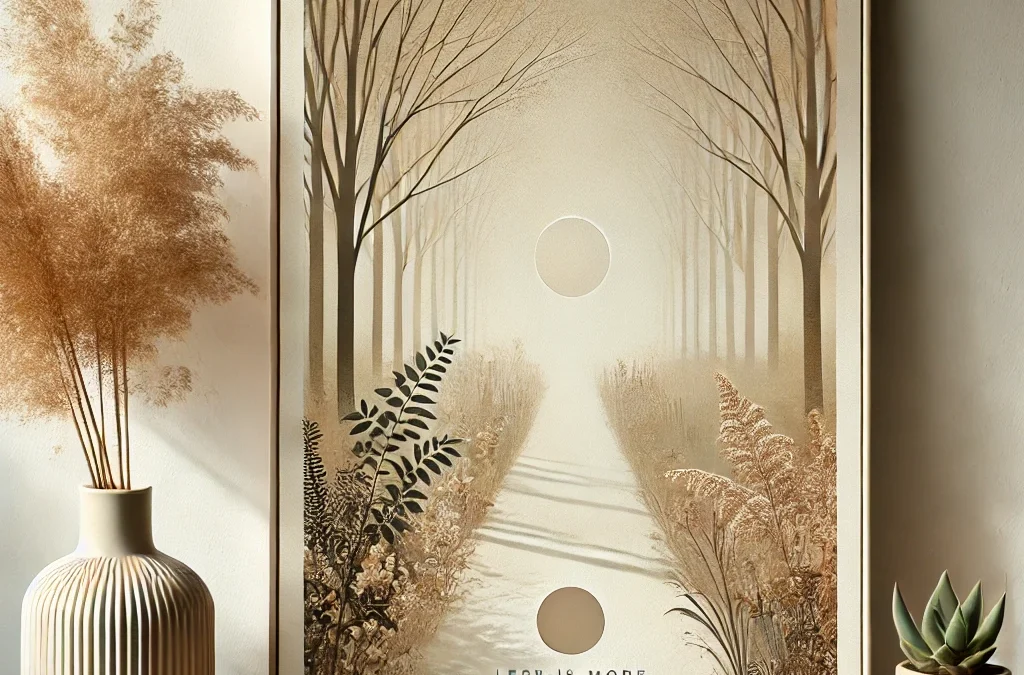
Let’s be honest—life can feel like a never-ending race sometimes. We’re chasing achievements, collecting stuff, and staying busy just for the sake of it. But at the end of the day, all that noise doesn’t always leave us feeling fulfilled, does it? Here’s the thing: finding meaning doesn’t come from adding more to our lives; it comes from focusing on less. Less stress, less clutter, and less chasing things that don’t matter. That’s where something as simple as a benefit statement comes in—a small, yet powerful way to reflect on what actually makes you happy.
What’s a Benefit Statement, Anyway?
A benefit statement is just a short, personal reminder of what you gain from something—whether it’s an action, a habit, or an experience. It’s not about what you do but why it matters to you. Think of it like a little snapshot of what’s truly important.
Here are a few examples:
- Spending time in nature helps me feel calm.
- Talking with close friends reminds me I’m not alone.
- Taking quiet moments for myself lets me recharge.
These statements are simple, but they’re powerful. They help you see what actually makes your life feel full and meaningful—no overthinking needed.
Why Simplicity Matters (and How to Keep It Simple)
Sometimes, we overcomplicate the whole “search for happiness” thing. We read a bunch of self-help books, set huge goals, or try to fix everything all at once. But here’s the truth: happiness often comes from the little things.
So, ask yourself:
What small actions bring me joy? When do I feel most at peace?
Don’t worry about coming up with something profound. The answers are usually small and quiet—like a morning walk, a moment of stillness, or a laugh shared with someone you care about. Those moments are gold. You just have to notice them.
How a Benefit Statement Helps You Focus on What Matters
Taking the time to write down your benefit statements isn’t just about feeling good in the moment. It helps you take a step back and see patterns in your life. You start to notice what fills you up and what drains you. You realize which relationships bring you joy and which ones leave you feeling empty.
When you focus on the things that benefit you, everything else gets clearer:
- You start to let go of things that don’t matter.
- You choose presence over perfection.
- You look for balance instead of constantly trying to do more.
And the best part? These little realizations add up. The small joys you focus on start to create a bigger, more meaningful picture of your life.
How to Write Your Own Benefit Statement (It’s Easy, I Promise)
Here’s a simple way to get started:
- Find a quiet moment—just a few minutes is enough.
- Think of a time recently when you felt happy, calm, or at peace.
- Ask yourself, What about that moment benefitted me?
- Write it down in one short sentence.
That’s it! It doesn’t have to be fancy or perfect. The most important part is being honest with yourself.
Example: Sitting outside in the morning sun helps me feel grounded and grateful.
Whenever life starts to feel overwhelming, come back to your benefit statements. They’re like little reminders of what really matters.
Less is More: Finding Peace in the Simple Things
Here’s the truth: You don’t need to chase more to find happiness. Sometimes, the peace you’re looking for is already right there in the small, simple moments—you just have to notice them.
A benefit statement helps you do that. It cuts through the noise and brings you back to what’s real, what’s simple, and what makes you feel alive.
So, let yourself slow down. Reflect on the small benefits in your life. And remember—sometimes, less really is more.
Let your benefit statements be your guide. They’ll lead you to more joy, more clarity, and the kind of peace you’ve been looking for all along.

by admin | Dec 16, 2024 | Lifestyle & Work, Mental health, Well-being, Wellness
Happiness. It’s something we all chase. Right? Whether we’re climbing the career ladder, seeking love, or filling our days with hobbies, at the root of it all is the same goal: to feel happy. But what happens when it seems like happiness is always out of reach, dangling like a carrot we can never quite grab? Does it mean we’re powerless over our own happiness?
It’s easy to feel that way sometimes. Life throws curveballs—stressful jobs, broken relationships, health struggles—and we’re left feeling as though we’re at the mercy of the world around us. Happiness feels fleeting as if it’s something that happens to us rather than something we have any control over. But here’s the truth: we have far more power over our happiness than we realize.
Understanding What Happiness Really Is
First, let’s break down the idea of happiness. For many of us, it’s tied to external circumstances—having a great job, a loving partner, or financial security. And while these things can contribute to our well-being, happiness isn’t always about what happens to us. It’s often about what happens within us.
Research in psychology shows that three main factors influence happiness:
- Our Circumstances (e.g., our job, relationships, health)
- Our Genetics (some people are naturally more prone to positivity)
- Our Intentional Actions (how we choose to think, act, and react)
While we can’t always change our genetics or fully control our circumstances, we have a tremendous amount of influence over our actions and mindset—and that’s where the magic happens.
The Power of Choice
Think about the last time you were faced with a challenge. Maybe you were passed over for a promotion or had an argument with a friend. In those moments, it’s easy to let negative emotions take over. But what if you had a choice? What if, instead of reacting with frustration or self-pity, you paused and asked yourself:
- What can I learn from this?
- How can I grow?
- Is there a way to find joy or gratitude in this moment?
Happiness doesn’t always come naturally. Sometimes, it requires effort. Choosing to focus on the good, to be grateful, or to look for lessons in hardship doesn’t mean ignoring pain or pretending everything’s okay. It means taking back your power by deciding how you respond.
Small Actions, Big Impact
The idea of “choosing happiness” can sound overly simplistic, but it’s grounded in science. Research shows that small, intentional actions can significantly improve our sense of happiness and well-being. Here are a few practical ways to regain power over your happiness:
- Practice Gratitude: Take a few moments each day to reflect on what you’re thankful for. Even small things, like a sunny morning or a kind word from a friend, can shift your mindset.
- Focus on What You Can Control: Life is unpredictable, but you always have control over your attitude, your actions, and how you treat others.
- Move Your Body: Exercise releases endorphins, which are natural mood boosters. A short walk or quick stretch can make a surprising difference.
- Connect with Others: Humans are wired for connection. Spend time with loved ones, reach out to an old friend, or simply smile at a stranger.
- Find Purpose in Small Moments: You don’t need grand achievements to feel fulfilled. Even helping a coworker or sharing laughter with family can give your day meaning.
Letting Go of the Myths
One of the biggest myths about happiness is that it’s supposed to be constant. The truth is, life comes with ups and downs. Happiness isn’t about being cheerful every second—it’s about building a foundation of well-being that allows you to weather life’s storms.
Sometimes, we also wait for happiness to arrive instead of creating it ourselves. We think, “I’ll be happy when I get that promotion,” or “I’ll feel better when I lose 10 pounds.” But happiness doesn’t live in some distant future. It’s something we can nurture right here, right now, no matter where we are in life.
You Are Not Powerless
So, are we powerless over our happiness? Absolutely not. While we can’t always control what happens to us, we can control how we think, how we act, and how we choose to experience the world. Happiness isn’t a destination you arrive at; it’s a practice you build, day by day.
Take a deep breath. Look around you. What’s one small thing you can do today to bring a bit more light into your life? Maybe it’s calling a friend, savoring your favorite meal, or simply pausing to appreciate this very moment.
Because in the end, happiness isn’t something you have to chase. You can create it—and you are more powerful than you know.

by admin | Dec 1, 2024 | Uncategorized
I will start this entry precisely by saying, “Today, I will practice focusing on my life by focusing on myself.” The first thing I need to make sure I do is keep myself separate from others. By that, I only mean outside of others’ space. First and foremost, it does not belong to me. And so, at the end of the day, I will make sure that I can talk about myself, not anyone else, and not worry about anyone else in the process.
It isn’t easy to practice this all the time, at least not at first. You see, I am a human being, a person. And so I usually take a look at others because I incessantly consider myself, even when doing things unknowingly, to make sure that I am okay enough and that we are okay enough to be around each other. This includes me listening to you. It includes me standing next to you, offering conversation, asking how you’re doing, and much more. All of these things are the things I need to make sure I stay clear of if I’m going to be considering myself, but moving towards because the first thing I need to do is stop also thinking much about myself as I’m okay as is, and then questioning so much about you because I get you at face value and there is nothing to worry about as I can make choices and sometimes they’re even made for me.
So today, this is how I will focus on myself and practice focusing overall to get used to it.

by admin | Nov 21, 2024 | Food & Health
I made this yesterday, and it was quite delicious. It was also filling, which makes it possibly good for two. It depends all on your appetite, of course. Here’s the recipe. Although I did not have the basil to garnish over, I did cook the sauce with cilantro spices.
Sure! Here’s a delicious recipe for Lentil Rotini with Vegan Feta and Roasted Garlic, served with crispy roasted Brussels sprouts. It’s a simple, flavorful dish packed with plant-based goodness!
Lentil Rotini with Vegan Feta and Roasted Garlic served with Crispy Roasted Brussels Sprouts
Ingredients:
For the Lentil Rotini:
- 8 oz lentil rotini (or any lentil-based pasta)
- 1 tbsp olive oil (for sautéing)
- 1/2 cup vegan feta cheese, crumbled (store-bought or homemade)
- 3-4 cloves garlic, minced
- Salt and pepper, to taste
- Fresh basil or parsley (optional, for garnish)
For the Crispy Brussels Sprouts:
- 1 lb Brussels sprouts, trimmed and halved
- 2 tbsp avocado oil (or any high-heat oil)
- 1/2 tsp salt (or to taste)
- 1/4 tsp black pepper (or to taste)
- 1/2 tsp dried oregano
- Optional: 1-2 tbsp balsamic vinegar or lemon juice (for a tangy finish)
Instructions:
- Prepare the Brussels Sprouts:
- Preheat the oven to 400°F (200°C).
- Trim the ends off the Brussels sprouts and slice them in half.
- Toss the Brussels sprouts with avocado oil, salt, black pepper, and oregano in a large mixing bowl until they’re evenly coated.
- Arrange the Brussels sprouts cut-side down on a baking sheet in a single layer for the crispiest texture.
- Roast in the preheated oven for 25-30 minutes, flipping halfway through until golden brown and crispy on the edges. If you’d like extra crispiness, roast for a few more minutes, but keep an eye on them so they don’t burn.
- Optional: For extra flavor, drizzle with a little balsamic vinegar or a squeeze of lemon juice before serving.
- Cook the Lentil Rotini:
- While the Brussels sprouts are roasting, bring a large pot of salted water to a boil.
- Add the lentil rotini and cook according to the package instructions, usually about 7-9 minutes. Stir occasionally to prevent sticking.
- Once cooked, drain the pasta, but reserve about 1/2 cup of pasta water for later.
- Make the Garlic and Vegan Feta Sauce:
- While the pasta cooks heat 1 tbsp of olive oil in a pan over medium heat.
- Add the minced garlic and sauté for about 1-2 minutes until fragrant and golden. Be careful not to burn the garlic.
- Add the drained pasta to the pan with the garlic and toss to combine. If the mixture feels dry, add a little of the reserved pasta water to create a light sauce.
- Add the crumbled vegan feta cheese and stir until it softens and melts into the pasta. Season with salt and pepper to taste.
- Assemble the Dish:
- Serve the lentil rotini on a plate or bowl, topped with the crispy roasted Brussels sprouts.
- Garnish with fresh herbs, such as basil or parsley, if desired.
- Enjoy your delicious, plant-based meal!
This recipe balances the hearty, protein-packed lentil rotini with the crispy, savory Brussels sprouts and tangy vegan feta, creating a satisfying and flavorful dish. The roasted garlic adds a lovely depth to the pasta, and the crispy sprouts add crunch and umami to each bite. Enjoy!


Recent Comments